

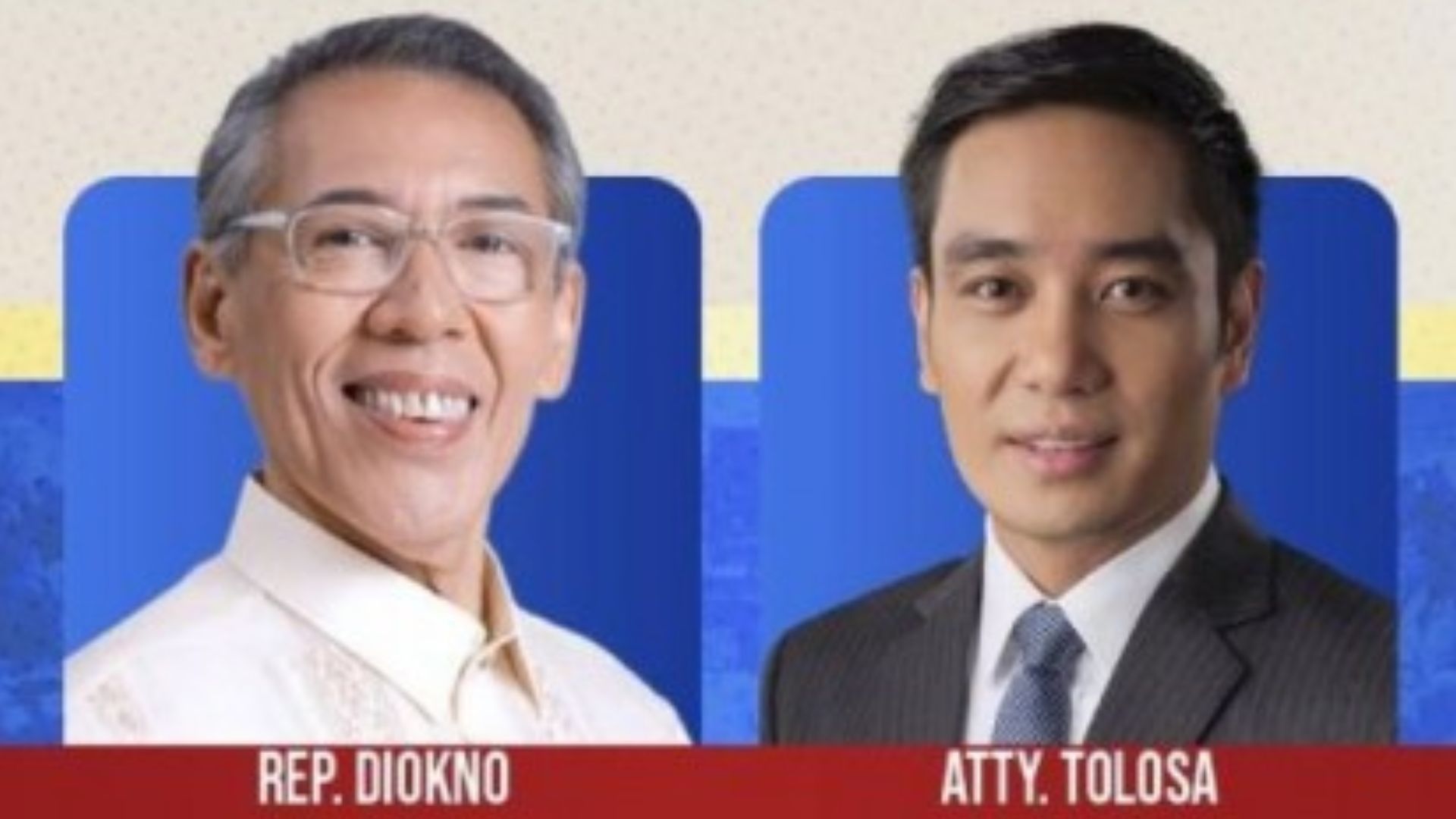







House of Representatives prosecutor and Akbayan Party-list Rep. Chel Diokno and House prosecution legal spokesperson Benjamin “Jay” Tolosa Jr. on Tuesday rejected claims that the prosecution impeached Vice President Sara Duterte first before searching for evidence, emphasizing that the Constitution assigns distinct roles to the House and the Senate in the impeachment process.
In a press conference at the Senate, they said the House had already gathered sufficient evidence to approve the Articles of Impeachment, while the Senate impeachment trial is the proper constitutional forum for the full presentation, examination, and testing of that evidence.
Diokno and Tolosa were responding to comments by Davao City Rep. Paolo “Pulong” Duterte questioning why the prosecution sought Senate subpoenas for the bank and Anti-Money Laundering Council (AMLC) records of her sister, Vice President Duterte, and her husband, lawyer Manases “Mans” Carpio, after the Articles of Impeachment had already been transmitted.
In a Facebook post written in Bisaya, Rep. Duterte reportedly portrayed the sequence as the impeachment coming first before the search for supporting documents.
Diokno said that characterization confused the House Committee on Justice’s probable-cause inquiry with the full trial conducted by the Senate impeachment court.
Under the Constitution, the House initiates impeachment cases and determines whether the allegations should proceed to trial. The Senate, on the other hand, has the sole power to try and decide the Articles of Impeachment, with the prosecution and defense presenting their respective evidence before the senator-judges.
“Noong pumasok ’yung impeachment complaint sa Committee on Justice ng House of Representatives, ang tungkulin ng committee noon ay malaman lang kung may probable cause (When the impeachment complaint entered the House Committee on Justice, the panel’s duty is to find if there’s probable cause),” Diokno said.
He said the committee was not expected to conduct the equivalent of the Senate trial or present every piece of evidence that might later become relevant.
“Wala sa trabaho namin na halungkatin ang lahat ng ebidensya at magkaroon mismo ng trial, dahil kamay na ng Senado ’yung pag-conduct ng trial (It is not our duty to search every evidence and conduct a trial, because it is the Senate’s mandate to conduct a trial),” he said.
“Kaya mapapansin ninyo, portion lang actually ng ebidensya ang nakita natin sa Committee on Justice (So, if you noticed, only a portion of the evidence was actually shown to the Justice Committee).”
Diokno said the House proceedings nevertheless included documentary submissions and testimony used to determine probable cause, and the Senate trial is the stage at which the parties seek compulsory process, call witnesses, and ask the impeachment court to admit evidence supporting or disputing the allegations.
“The time to have evidence presented – and siyempre, para makapag-present ng ebidensya, ’yung panahon para sa subpoena – ay dito sa loob ng (and to present evidence, the tome for subpoena – is here within the) Senate Impeachment Court,” he said.
The impeachment court on Monday granted the prosecution’s requests for subpoenas covering specified peso-denominated bank records, AMLC documents, and Bureau of Internal Revenue records. It found the granted requests reasonably described, readily identifiable, and prima facie relevant and material to the allegations under Article II, which concerns alleged unexplained wealth.
The court did not authorize an unrestricted examination. It excluded foreign-currency deposits and two corporations for which it found insufficient links. AMLC records will first undergo an in-camera review, while the BIR commissioner must make the appropriate return before the court determines what tax records may lawfully be produced.
Diokno said the sequence followed by the prosecution conformed to the Constitution rather than bypassing it.
“Walang pinagkaiba ’yung ginawa naming proseso doon sa inilatag na proseso sa ating Saligang Batas. Kaya kami naniniwala at paulit-ulit naming sinasabi na walang fishing expedition, wala ring shortcut (What we did is no different from the process laid down under the Constitution. That’s why we believe and repeatedly declare that there is no fishing expedition and there’s no shortcut here),” he said.
Tolosa, meanwhile, compared the two-stage impeachment process with a criminal case, where prosecutors first determine probable cause before the court conducts a full trial.
He stressed that the comparison concerned the sequence of proceedings, not the evidentiary standard ultimately applicable to impeachment.
“Tulad ng sinabi ni Cong. Chel, before the House of Representatives, determination muna ng probable cause. Ganoon din sa criminal case before the prosecutor’s office: determination of probable cause (Like what Cong. Chel said, determination of probable cause comes first at the House of Representatives. It’s like in a criminal case before the prosecutor’s office: determination of probable cause),” Tolosa said.
“Hindi pa talaga required at inaasahan na ipapakita na lahat ng ebidensya. Lahat ng ebidensya, lalabas ’yan (It’s not really required and expected to show all the evidence. All evidence, that will be revealed) during the trial itself.”
The prosecutors clarified that the subpoena ruling does not establish the truth of the allegations or make the requested records automatically admissible.
The documents must still be produced, authenticated and formally offered, while the defense may object to their admission and explain the transactions reflected in them.
Tolosa said the Senate proceeding is therefore the proper stage for both parties to build their complete evidentiary records.
“Pagsampa sa impeachment court, ito na ho ’yung full-blown trial. Ito na ’yung tamang venue para hingin, ilabas, at siyasatin natin lahat ng ebidensya (Upon reaching the impeachment court, it is now a full-blown trial. This is now the proper venue to request, reveal, and analyze all evidence),” he said. (PNA)