

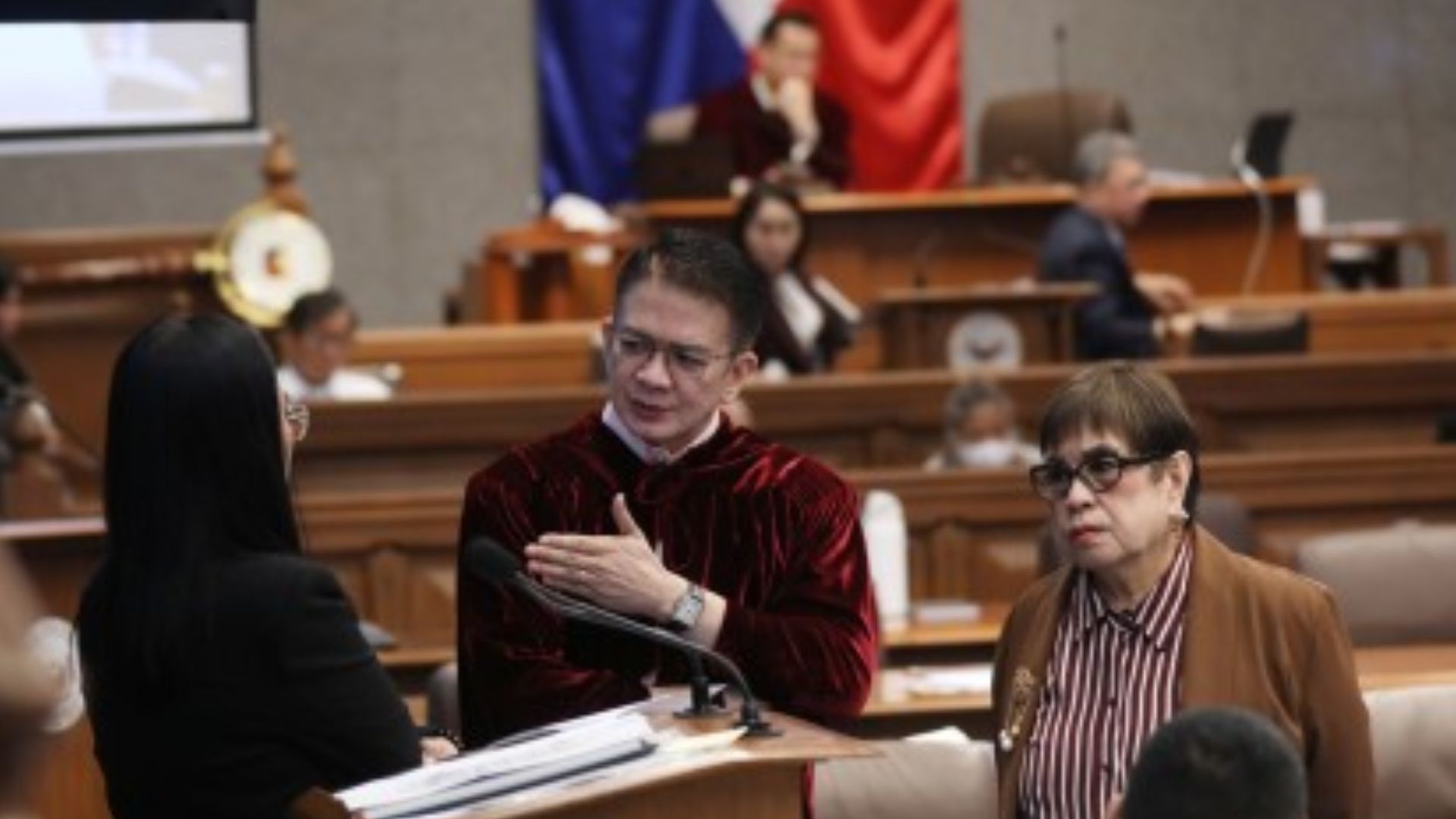







The Senate impeachment court may hold oral arguments before deciding whether Vice President Sara Duterte can be compelled to testify in her own impeachment trial should House prosecutors formally seek a subpoena, court spokesperson Reginald Tongol said Tuesday.
In a press briefing, Tongol said the prosecution maintains that Duterte may be subpoenaed, while her defense argues that compelling the respondent to take the witness stand would violate her constitutional right against self-incrimination.
“Ang position naman ng kabila, nila Atty. Michael Poa, the respondent’s counsel, ay absolute right against self-incrimination… at hindi pwedeng ipatawag by any court ang isang akusado or respondent in an impeachment court (The position of the other side, through Atty. Michael Poa, is that the right against self-incrimination is absolute… and an accused or respondent in an impeachment court cannot be compelled by any court to testify),” Tongol said.
He said the conflicting legal positions would have to be resolved when prosecutors formally ask the court to issue the subpoena.
“Pagdating ng panahon na mag-request na talaga sila for subpoena yung House Prosecution Panel, bibigyan sila ng oras para makapag-respond naman o baka sakaling (Once the House Prosecution Panel formally requests a subpoena, the other side will be given time to respond, or there may even be) oral arguments when the time comes,” Tongol said.
He said the court could follow a process similar to the earlier dispute over subpoenas duces tecum for records from the banks, Anti-Money Laundering Council and Bureau of Internal Revenue, where the defense was allowed to submit written arguments before both sides faced senator-judges in oral arguments.
Tongol said the question of Duterte testifying would carry even greater constitutional implications because it directly touches on a protection under the Bill of Rights.
“Mas importante ito at magkakaroon ng ganong prosesong oral arguments (This is more important, and there may be a similar oral argument process) when the time comes that they request for the subpoena to be issued,” he said.
The prosecution has not yet formally sought a subpoena compelling Duterte to take the witness stand.
Tongol said Duterte may also choose to testify voluntarily, which would eliminate the need for the court to first resolve whether she can be compelled to appear.
“It is totally the respondent’s prerogative if she wants to be a witness,” he said, citing the impeachment trial of late Chief Justice Renato Corona, who voluntarily appeared during his own proceedings.
If Duterte voluntarily testifies, however, Tongol said she would have to submit to cross-examination by the opposing side.
“Kapag uupo ka na (Once you take the witness stand), the other party has to cross-examine you,” he said.
He added that testimony could be stricken from the record if a witness prevents the opposing party from exercising the right to cross-examination.
Asked whether contempt could become an issue if the court eventually issues a subpoena and Duterte refuses to comply, Tongol said such a scenario remains within the realm of possibility but stressed that the court would deal with the legal consequences only if the situation arises.
The impeachment trial is set to resume on Sept. 14, with the House prosecution panel beginning its presentation of evidence on Article II involving allegations of unexplained wealth. (PNA)